
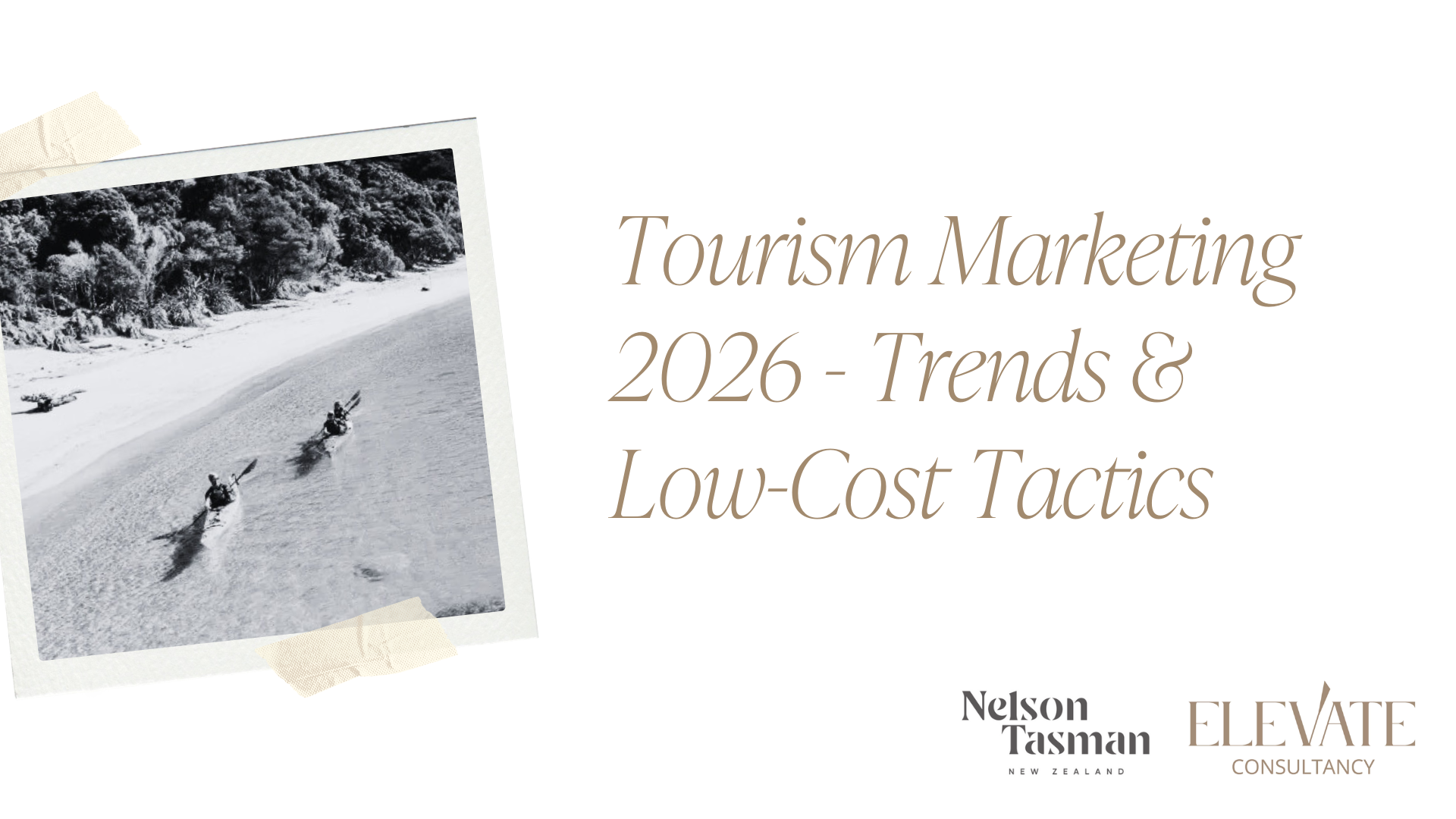
Tourism is moving into a new phase
Demand remains strong, but traveller expectations, digital behaviour, and booking habits continue to shift. For tourism operators, the challenge in 2026 is not simply attracting attention — it is converting interest into action and building sustainable growth.
Based on current industry movement and the themes emerging through our tourism workshops, these are the areas operators should focus on now.
1. Experience-led travel continues to grow
Travellers are increasingly choosing experiences that feel meaningful, personal, and memorable. They are looking for connection — to place, people, and story — rather than just ticking items off an itinerary.
What this means in practice:
- Shift messaging from features to outcomes and emotions.
- Show people experiencing your product, not just the location.
- Build narratives around culture, conservation, food, or local identity.
Operators who clearly communicate the “why” behind their experience tend to stand out more strongly.
2. Conversion points are now the priority
Visibility is no longer the primary challenge. Many operators already have strong traffic or social engagement. The real question is what happens after someone discovers your business.
Key conversion points to review include:
- Website clarity and booking flow
- Mobile usability and page speed
- Calls to action that are clear and easy to follow
- Trust signals such as reviews, awards, and social proof
- Enquiry response time and follow-up systems
Small improvements at these points often produce far greater results than increasing reach alone.
3. Booking journeys are longer and more complex
Travellers rarely make decisions from a single interaction. They might discover you on social media, compare options later, read reviews, and return to your site multiple times before booking.
This means operators should design for the full journey:
- Consistent messaging across channels
- Clear next steps at every stage
- Content that answers questions early in the decision process
- Email nurturing or remarketing that keeps you top of mind
The aim is to reduce friction wherever a potential guest might pause or drop off.
4. Story-led content drives decisions
Travel is inherently visual and emotional. Video and storytelling continue to influence destination choice and booking confidence.
Effective content for 2026 tends to be:
- Authentic rather than highly produced
- Focused on real experiences and people
- Clear about what guests can expect
- Aligned with the brand tone across all channels
Storytelling is not about entertainment alone. It helps travellers imagine themselves in your experience, which increases conversion likelihood.
5. Trust and credibility matter more than ever
Travellers are making higher-consideration decisions and looking for reassurance before booking.
This includes:
- Awards and recognitions
- Independent reviews
- Media coverage or industry endorsements
- Clear policies and transparent communication
Operators should make these trust signals easy to see at key decision points, particularly on booking pages.
6. Sustainability and community connection are expected, not optional
Travellers increasingly look for responsible operators, local ownership, and experiences that give back to environment or community. Industry analysis suggests regenerative and community-led tourism is becoming a structural shift rather than a niche choice.
This does not mean adding sustainability messaging as an afterthought. It means making your values visible through:
- Local partnerships
- Conservation efforts
- Community contribution
- Transparent practices
For operators working alongside organisations like Tourism New Zealand, this aligns strongly with broader destination positioning.
7. Measurement is becoming more practical and focused
Rather than tracking every possible metric, successful operators are narrowing their focus to the numbers that indicate real business impact, such as:
- Conversion rate from website visitor to booking
- Enquiry-to-booking ratios
- Repeat visitors or referrals
- Revenue per guest
Looking at these metrics monthly allows operators to adjust quickly and make smarter decisions.
8. AI and search changes are reshaping discovery. Get ready for GEO
Travel search is evolving quickly. AI-driven recommendations and planning tools are changing how travellers research destinations.
What matters now:
- Clear, helpful website content that answers real questions
- Strong FAQs and practical guides
- Structured information that helps AI and search engines understand your offering
Operators who explain their product clearly will be easier to discover in the next generation of search. Develop draft itineraries and product/service guides with all the details, structure it clearly with various headings and bullet points. These can be linked from your main selling page or use a drop-down accordion – just make sure it’s readable for AI search.
What this means for operators in 2026
Tourism marketing is becoming more mature. The winners will be businesses that:
- Understand their customer journey
- Strengthen conversion points
- Communicate clear, experience-led stories
- Build trust consistently across every touchpoint
- Prepare for AI Search (GEO)
Growth won’t come from doing more. It will come from improving the moments where potential guests decide to take the next step.
Final thought
2026 is less about chasing trends and more about refining the fundamentals. When operators focus on conversion, clarity, and connection, marketing becomes easier to manage and far more effective over the long term. Contact us for a copy of our Tourism Marketing for 2026 presentation delivered in December 2025 by Elevate Consultancy for the Nelson Regional Development Agency.